


If you recently added shakes to your routine, you may wonder: does protein powder cause constipation? It can contribute to constipation for some people, but protein itself is not always the main problem. Low fiber, inadequate fluids, lactose, and certain added ingredients may matter more.
Protein supplements can also replace foods that normally provide fiber and water. That dietary shift may make stools harder or less frequent. Some whey products can cause constipation, diarrhea, nausea, or other digestive symptoms in sensitive users.
Quick answer: Protein shakes can contribute to constipation in some people, especially when they replace fiber-rich foods. Low fluid intake, lactose sensitivity, large servings, and certain ingredients may also play a role. Adding fiber-rich foods, drinking enough fluids, and changing the product or serving size may help.
Protein Shakes and Constipation at a Glance
| Question | Practical answer |
|---|---|
| Can a protein shake cause constipation? | Yes, in some people. |
| Is protein itself always responsible? | No |
| Common contributors | Low fiber, low fluid intake, lactose, large servings |
| Does whey cause digestive issues? | It can be sensitive for some people. |
| Can plant protein cause problems? | Yes, depending on ingredients and tolerance |
| Helpful first steps | Review fiber, fluids, serving size, and product ingredients. |
| When to seek care | Persistent symptoms or concerning warning signs |
Key Takeaways
- Protein supplements contain little or no fiber unless manufacturers add it.
- Replacing meals with shakes may reduce fruit, vegetable, legume, and whole-grain intake.
- Whey may cause digestive symptoms in people who have trouble digesting lactose.
- Increasing fiber too quickly can also produce bloating and discomfort.
- Persistent constipation deserves medical evaluation, especially with warning signs.
Does Protein Powder Cause Constipation Because It Has Too Much Protein?
Protein alone does not automatically cause constipation in every person. Dietary patterns surrounding high protein intake often matter more. Restrictive high-protein diets can become low in fiber when fruits, vegetables, legumes, and whole grains disappear.
Research on total dietary protein also does not show one simple relationship. A 2024 NHANES analysis found different associations between protein intake and constipation among men and women. Because that study was observational, it cannot prove that protein intake directly caused those differences.
Your overall diet therefore deserves more attention than one nutrient alone. A shake added beside balanced meals may affect digestion differently than several meal-replacement shakes. Look at what the supplement displaced before blaming protein by itself.
1. Your Diet May Be Too Low in Fiber
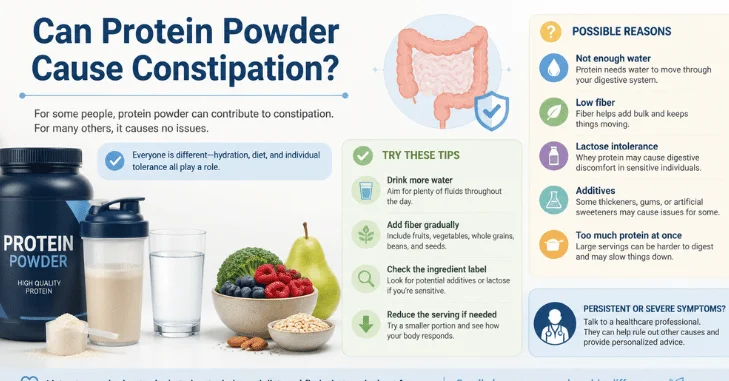
Many shakes provide substantial protein but little dietary fiber. Problems can start when shakes replace foods such as oatmeal, beans, fruit, or whole grains. Those foods add bulk and help support normal bowel movements.
The National Institute of Diabetes and Digestive and Kidney Diseases recommends enough dietary fiber for regularity. U.S. adults generally need about 22 to 34 grams daily, depending on age and sex. Fiber should be increased gradually to reduce unwanted gas or bloating.
Try reviewing an entire day of eating instead of examining only your shake. Check whether breakfast, lunch, dinner, and snacks still include fiber-rich foods. A supplement should complement a balanced diet rather than crowd those foods out.
2. You May Not Be Drinking Enough Fluids
Fluid helps dietary fiber work effectively and can make stools easier to pass. Dehydration is also a recognized contributor to constipation. Your needs may increase with exercise, heat, sweating, and other individual factors.
A thick shake does contain fluid, but that does not guarantee adequate hydration. Someone exercising regularly may need additional liquids throughout the day. Pay attention to thirst and your usual hydration habits around workouts.
There is no single ideal water amount for every adult. Body size, activity, climate, health conditions, and medications can change fluid needs. A healthcare professional can provide individualized guidance when fluid intake must be limited.
3. Whey and Lactose May Upset Your Digestive System
Whey comes from milk and can contain varying amounts of lactose. People who digest lactose poorly may experience gastrointestinal symptoms after some whey products. Symptoms can differ depending on the product and individual tolerance.
Whey concentrate generally contains more lactose than highly processed whey isolate. A lactose-sensitive person may therefore tolerate one formulation better than another. Reading the ingredient panel can help you compare products.
Milk allergy is different from lactose intolerance and can be more serious. People with a cow’s milk allergy should not experiment casually with whey products. Medical guidance is appropriate when an allergy may be involved.
4. The Serving Size May Be Larger Than Your Gut Tolerates
A larger scoop does not always mean a better result. High doses can be harder for some people to tolerate comfortably. Cleveland Clinic notes digestive problems can occur with whey, particularly when people consume large amounts.
Serving size becomes especially relevant when several shakes are consumed daily. Multiple servings may displace foods that provide fiber and other nutrients. They can also make identifying the troublesome ingredient harder.
Consider returning to the labeled serving size if you recently increased your intake. You can then observe whether your bowel habits improve. Avoid making several dietary changes simultaneously because that hides the likely trigger. For more everyday wellness guidance, you can browse the ReadsNow Health section.
5. Sweeteners and Other Added Ingredients May Matter
Protein supplements often contain much more than a protein source. Formulas can include sweeteners, gums, thickeners, flavorings, vitamins, minerals, and carbohydrate ingredients. Different digestive systems respond differently to those additions.
Cleveland Clinic advises people with certain digestive conditions to examine lactose, artificial sweeteners, dextrins, and maltodextrins. These ingredients do not affect everyone the same way. Your ingredient list can therefore offer useful clues when symptoms start after switching brands.
Compare your old and new products if constipation began after a change. A simpler ingredient list may make troubleshooting easier. Change one variable at a time so you can judge the result.
6. Your Shake May Be Replacing Whole Foods Too Often
Whole foods provide nutrients that isolated supplements cannot always match. Fruits, vegetables, whole grains, beans, seeds, and nuts can provide both fiber and micronutrients. Frequent meal replacement may reduce those foods without you noticing.
Harvard Health notes that powders vary greatly in ingredients and nutritional quality. Cleveland Clinic also emphasizes that shakes do not provide the same nutrition as whole foods. Supplements are best viewed as convenient additions rather than automatic meal replacements.
Look at why you use the shake in the first place. Convenience after exercise is different from replacing several complete meals every day. The second pattern requires more attention to fiber, produce, and overall dietary variety.
7. Another Cause May Be Responsible
Constipation has many possible causes unrelated to supplements. Reduced physical activity, routine changes, medications, medical conditions, and dehydration can all contribute. Several factors may occur at the same time.
Common medicines and supplements can also change bowel habits. NIDDK lists iron supplements, certain antacids, some antidepressants, narcotic pain medicines, and other medications among possible contributors. Do not stop prescribed medicine without discussing it with the prescribing clinician.
Think about what changed shortly before your symptoms started. New medications, travel, illness, reduced movement, or a different diet may provide stronger clues. A short symptom and food log can help reveal patterns.
How to Relieve Constipation While Using Protein Supplements
Start by preserving fiber-rich foods throughout your day. Include choices such as berries, pears, beans, lentils, oatmeal, vegetables, and whole grains. Increase fiber gradually because sudden large increases may cause bloating.
Next, review your fluid intake and your supplement’s ingredient label. Consider whether symptoms began after changing flavors, brands, formulations, or serving sizes. People sensitive to lactose may want to discuss suitable alternatives with a dietitian or clinician.
Regular movement may also support bowel function for many people. Avoid relying on repeated laxative use without understanding the cause of persistent symptoms. Medical advice is especially useful when simple dietary adjustments do not help.
Whey vs. Plant Protein: Which Is Less Likely to Cause Constipation?
| Factor | Whey protein | Plant-based protein |
|---|---|---|
| Lactose | May contain some | Usually dairy-free |
| Natural fiber | Usually low | Varies by source and formula |
| Digestive tolerance | May trouble for lactose-sensitive users | May cause gas or bloating for some users |
| Added sweeteners | Common in flavored products | Also common |
| Best choice | Depends on individual tolerance | Depends on individual tolerance |
Neither category is automatically constipation-proof. A plant product may contain ingredients that bother your digestive system. A whey product may be comfortable for someone who handles dairy well.
Choose based on your symptoms, dietary needs, and ingredient tolerance. Do not assume a more expensive product will digest better. A short ingredient list can sometimes make identifying triggers easier.
When Constipation Needs Medical Attention
Occasional mild constipation often improves with dietary and routine changes. Persistent symptoms can have causes that deserve proper evaluation. Contact a healthcare professional when constipation continues despite reasonable self-care.
Seek prompt medical care for constipation with rectal bleeding, blood in stool, constant abdominal pain, vomiting, or fever. Inability to pass gas and unexplained weight loss also need medical attention. These symptoms should not be blamed automatically on a shake.
People with kidney, liver, gastrointestinal, or other chronic conditions should discuss major dietary changes with their clinician. Supplement needs can differ when underlying conditions are present. Personalized advice is safer than applying general protein targets to everyone.
Frequently Asked Questions
Does protein powder cause constipation every time you use it?
No, and many people use protein supplements without becoming constipated. Problems are more likely when other digestive or dietary factors are present. Fiber intake, hydration, lactose tolerance, serving size, and added ingredients are useful places to investigate.
Can whey protein make you constipated?
It can contribute to digestive symptoms in some users. Cleveland Clinic specifically lists constipation among possible digestive problems associated with whey intake. People with lactose intolerance may also have difficulty with certain whey formulations.
Can protein shakes replace meals?
A shake can be convenient, but frequent replacement can reduce dietary variety. Whole foods commonly provide fiber, vitamins, minerals, and other nutrients that basic powders lack. Consider what the shake removes from your diet, not only what it adds.
How much fiber should U.S. adults get?
NIDDK states that adults generally need between 22 and 34 grams daily. The appropriate amount varies by age and sex. Increase fiber gradually and consume enough fluids to support its effects.
Should I stop taking my supplement if I become constipated?
You may first review serving size, hydration, fiber intake, and ingredients. Persistent or significant symptoms deserve professional medical advice. A clinician can help determine whether the supplement or another cause is responsible.
The Bottom Line
A protein shake can contribute to constipation, but the explanation is often broader than protein alone. Low fiber, insufficient fluids, lactose sensitivity, large servings, or other ingredients may affect bowel habits. Looking at the whole diet usually provides more useful answers.
Start with simple changes and track whether symptoms improve. Keep fiber-rich foods in your meals and review the product label carefully. Seek medical care when symptoms persist, or warning signs appear.