
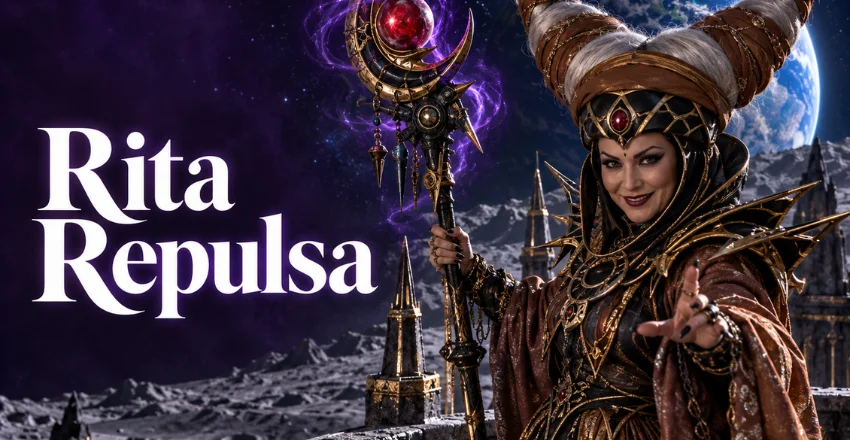
Rita Repulsa is one of the Power Rangers franchise’s most recognizable villains. She first threatened Earth in Mighty Morphin Power Rangers after escaping a long imprisonment. Her theatrical personality, magical attacks, and memorable voice helped define the show’s earliest years.
Rita was the Mighty Morphin team’s first major enemy. Her story later expanded through television, movies, and anniversary projects. Different performers portrayed or voiced her across those appearances, while later stories transformed her from an evil sorceress into the Mystic Mother and introduced the separate Robo Rita threat.
| Key fact | Details |
|---|---|
| Franchise | Power Rangers |
| First major role | Main early villain of Mighty Morphin Power Rangers |
| Original Japanese performer | Machiko Soga |
| U.S. live-action performer | Carla Perez |
| Classic English voice | Barbara Goodson |
| 1995 movie performer | Julia Cortez |
| 2017 reboot performer | Elizabeth Banks |
| Major abilities | Magic, energy attacks, spells, monster enlargement |
| Major ally and husband | Lord Zedd |
| Later identity | Mystic Mother |
| Anniversary version | Robo Rita in Once & Always |
Key Takeaways
- The character originated from footage of Witch Bandora in Japan’s Kyōryū Sentai Zyuranger.
- Machiko Soga appeared in the Japanese footage adapted for the American series.
- Carla Perez later performed the physical scenes for newly produced American footage.
- Barbara Goodson supplied the familiar English voice during the classic television run.
- Elizabeth Banks played a substantially redesigned version in the 2017 movie.
- The television continuity eventually connected the former villain with the benevolent Mystic Mother.
- Once & Always brought back her evil essence as the robotic Robo Rita.
Who Is Rita Repulsa in Power Rangers?
She is the sorceress whose return sets the original Mighty Morphin story into motion. Zordon had imprisoned her thousands of years before the show’s present-day events. After her release, her assault on Earth prompts Zordon to recruit the original team of Rangers.
That setup made her much more than another weekly television antagonist. Her actions create the reason the original heroes assemble in the first place. She also provides the show with monsters, schemes, magic, and the escalating battles that became franchise trademarks.
Her distinctive presentation made her easy for young viewers to recognize. The elaborate costume, horned headdress, staff, booming personality, and unusual voice created a memorable combination. Her frequent frustration after defeats also added comedy to a character who could otherwise appear threatening.
Readers interested in other long-running screen characters can also explore ReadsNow’s Gary Cole career profile. His career offers a different example of how familiar television roles can span generations.
Where Did the Character Come From?
The American series famously combined newly filmed U.S. material with footage from Japan’s Super Sentai franchise. The original villain footage came from Kyōryū Sentai Zyuranger. Machiko Soga played Witch Bandora, whose footage became the visual foundation for the American antagonist.
This production method explains why several people can legitimately be associated with playing the same character. Soga supplied much of the early on-screen appearance through adapted Japanese scenes. Barbara Goodson then provided the English-language voice familiar to American audiences.
Fresh American footage eventually became necessary as the series developed beyond its original Japanese source material. Carla Perez took over the physical role for those scenes. Goodson’s voice remained part of the characterization, helping the transition feel consistent.
Who Played the Famous Power Rangers Villain?
Several performers contributed to the character across television and film. Understanding their different roles clears up a common source of confusion. Some supplied the physical performance, while others provided the English voice.
| Performer | Version or contribution |
|---|---|
| Machiko Soga | Original adapted Zyuranger footage |
| Carla Perez | Later U.S.-produced television footage |
| Barbara Goodson | Classic English voice and 2023 voice return |
| Julia Cortez | 1995 theatrical movie |
| Susan Brady | Mystic Mother’s voice |
| Elizabeth Banks | Reimagined 2017 movie version |
Goodson’s contribution became especially important because audiences associated her performance with the villain’s personality. Netflix brought her back for Mighty Morphin Power Rangers: Once & Always. The anniversary special used her voice for the robotic incarnation of the old enemy.
The various portrayals also show how flexible the franchise became over time. A single character could move between reused Japanese footage, American television production, theatrical films, and modern streaming. That unusual history is part of her continuing appeal.
What Powers Does She Have?
Magic underpins the villain’s abilities in the classic continuity. She uses spells, magical attacks, teleportation, and other supernatural techniques against the Rangers. Her staff is also closely tied to one of the show’s most recognizable battle formulas.
She can make defeated monsters grow to enormous size. That ability creates the transition from ordinary combat to giant Zord battles. She has also used magic to manipulate people and turn characters against the Rangers temporarily.
Tommy Oliver’s introduction provides one of the clearest examples of her strategic threat. Rather than relying only on another monster, she uses an empowered human opponent against the team. That conflict became one of the defining stories of early Mighty Morphin Power Rangers.
Her powers therefore matter for more than spectacle. They let stories introduce new enemies, altered loyalties, magical traps, and larger battles. That variety helped keep her schemes adaptable throughout the show’s early period.
Her Relationship With Lord Zedd
Lord Zedd eventually became another central enemy of the Rangers. His arrival changed the villain hierarchy and reduced Rita’s status as the sole major threat. Their relationship later shifted again when they married.
The pairing pushed both villains toward broader comedy without removing their danger entirely. Arguments and exaggerated domestic moments became part of their scenes. Their relationship gave the show a different villain dynamic from the earlier Moon Palace stories.
The franchise continued using that relationship in later continuity references. Its longevity shows how these characters gradually became more than temporary children’s television villains. They became recurring pieces of Power Rangers mythology.
For another look at how repeated themes become embedded in pop culture, see the ReadsNow guide to the Vin Diesel family meme. It examines how a recurring movie idea became recognizable far beyond its original scenes.
What Happened to Her in the Original Timeline?
A major change arrives during the Power Rangers in Space finale. Zordon’s sacrifice releases an energy wave that removes evil across the battlefield. Rita and Lord Zedd are among the characters affected by that event. The story does not simply destroy her. Instead, the wave purifies her evil and changes the direction of her history.
This development later gave the franchise room to reinterpret what became of the former conqueror. That idea returned prominently in Power Rangers Mystic Force. The series identifies the Mystic Mother as the figure once known by the old villainous name. She now represents good magic rather than the forces she previously commanded.
How the Mystic Mother Changes Her Story
The Mystic Mother creates one of the franchise’s most unusual redemption developments. A foundational villain eventually becomes associated with good magic. That outcome gives her history a larger arc than endless defeats by successive Ranger teams.
The casting connection also adds significance to the transformation. Machiko Soga appeared as the Mystic Mother after supplying the Japanese footage behind the original American villain. Susan Brady provided the English voice for that later incarnation.
The result connects distant parts of Power Rangers history. One character’s transformation links early Mighty Morphin material and Mystic Force. Longtime viewers therefore receive a payoff that newer audiences might easily miss.
Why Is the 2017 Movie Version So Different?
The 2017 Power Rangers film did not simply copy the television costume and characterization. Elizabeth Banks played a redesigned interpretation created for the reboot’s separate continuity. Her appearance used darker green armor and a more contemporary science-fiction aesthetic.
The change reflected the movie’s broader attempt to rebuild familiar franchise elements for a modern theatrical audience. Its Rangers, Zords, costumes, and villain designs all received substantial revisions. That approach separated the film visually from the deliberately colorful television style.
Because the movie operates as a reboot, its backstory should not be treated as a replacement for every television event. It is better understood as another interpretation of the same famous antagonist. Similar remake questions surround other long-running properties, including the developments covered in ReadsNow’s Christine remake update.
Why Did Robo Rita Return Once & Always?
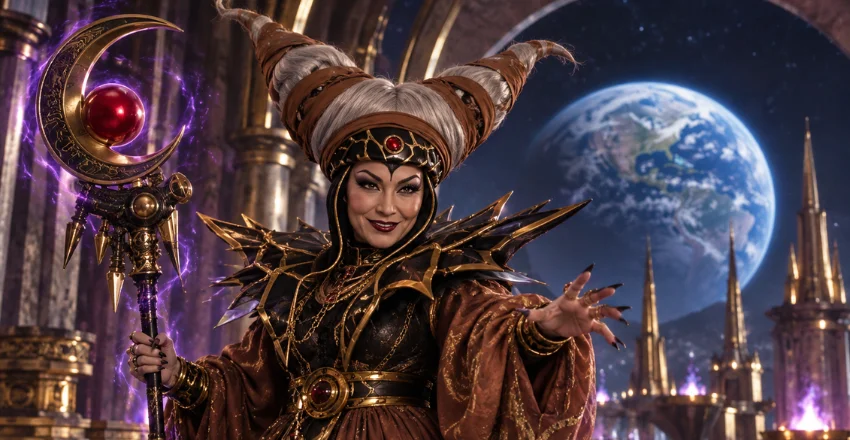
The 2023 Netflix anniversary special created a way to revive the classic threat without simply reversing her earlier redemption. Billy’s attempt to find Zordon instead releases the evil essence that had been separated from Rita. That evil takes control of Alpha 8 and becomes Robo Rita.
This distinction matters because the robotic enemy represents the character’s purged evil. The story can therefore revisit the familiar antagonist while preserving the Mystic Mother development. It also gives the anniversary special a villain closely tied to the franchise’s beginning.
Barbara Goodson returned to provide the voice, strengthening that connection with the 1990s series. Netflix promoted the return as part of the special’s 30th-anniversary reunion. Familiar Rangers, enemies, and references supported the same nostalgia-driven approach.
Why the Character Still Matters
The villain remains significant because she is connected directly to the franchise’s creation story. Her attack leads Zordon to recruit the original five heroes. Few later antagonists can claim such an important position in the basic Power Rangers premise.
Her production history also mirrors the franchise itself. Japanese source footage, American voice work, new U.S. filming, theatrical reinvention, and streaming nostalgia all shaped her portrayal. Each era changed something while retaining enough familiar traits for audiences to recognize the character.
She also moved further narratively than a typical recurring villain. Her story includes conquest, defeat, marriage, purification, a magical identity change, and a robotic evil counterpart. That long development helps explain why she remains recognizable decades after her debut.
Frequently Asked Questions
Who is Rita Repulsa?
She is the original major villain of Mighty Morphin Power Rangers. Her escape and attack on Earth motivate Zordon to assemble the first Ranger team. Later stories in the franchise expand her history far beyond that original role.
Who originally played her?
Machiko Soga supplied the early visual performance through footage from Kyōryū Sentai Zyuranger. Carla Perez later portrayed the character in newly filmed American material. Barbara Goodson supplied the classic English-language voice.
Did Elizabeth Banks play the same version?
Banks played the villain in the 2017 theatrical reboot. That film redesigned the character and gave her a different visual identity. It’s a separate interpretation rather than a continuation of the 1990s television storyline.
Did she eventually become good?
Yes, the classic television continuity later connects her with the Mystic Mother. The change follows the purification caused by Zordon’s energy wave. Mystic Force presents the former villain as the Empress of Good Magic.
Is Robo Rita the original character?
Robo Rita represents the evil essence separated during the earlier purification. In Once & Always, that evil possesses Alpha 8 and gains a robotic body. This allows the old threat to return without erasing the Mystic Mother storyline.
A Villain Who Grew With Power Rangers
Few franchise villains have changed this much while staying recognizable. The character began as the magical enemy who triggered the Rangers’ formation. Later stories expanded her from a recurring antagonist into an important part of the franchise’s wider mythology.
Her many performers also reveal the unusual production history behind Power Rangers. Japanese footage, American performances, voice acting, cinema, and streaming all contributed to the same legacy. That layered history makes her especially interesting for viewers revisiting the series today.
For more character histories, movie developments, and pop-culture explainers, explore the Entertainment coverage on ReadsNow. Comparing older favorites with their newer interpretations can make long-running franchises much easier to follow.