

Absolute Two Face is one of the most striking reinventions in DC’s Absolute Batman. This Harvey Dent begins as Bruce Wayne’s longtime friend, not an established enemy. His transformation turns a familiar Batman villain into something far more personal for Bruce.
Direct answer: Absolute Two Face is the Absolute Universe version of Harvey Dent. He emerges prominently in Absolute Batman #21 after brutal events reshape both his body and mind. His long hair, split visual design, coin imagery, and fractured mental state reinterpret the classic character while keeping his familiar theme of duality.
| Quick fact | Details |
|---|---|
| Character | Harvey Dent |
| Identity | Two-Face |
| Universe | DC Absolute Universe |
| Major debut issue | *Absolute Batman #21* |
| U.S. release date | June 17, 2026 |
| Writer | Scott Snyder |
| Main artist | Nick Dragotta |
| Story arc | *The Straw Man* |
| Key design feature | Long hair used to emphasize his divided identity |
| Connection to Batman | Childhood friend of Bruce Wayne |
Absolute Batman #21 was released in the United States on June 17, 2026. Scott Snyder wrote the issue, while Nick Dragotta handled the interior art. The issue places Harvey among several familiar figures who receive darker reinventions in the Absolute Universe.
Who Is Absolute Two Face?
This version of Harvey Dent comes from DC’s Absolute Universe, where familiar characters follow dramatically altered histories. Bruce Wayne grows up alongside people who traditionally become members of Batman’s rogues’ gallery. Harvey therefore enters Bruce’s life as a friend before his transformation creates a dangerous new conflict.
That change makes his story different from the standard Batman relationship. Traditional versions often position Harvey as a respected district attorney whose fall deeply affects Bruce. The Absolute continuity makes that tragedy more intimate because their friendship stretches back much further.
Harvey also doesn’t start as someone destined to oppose Batman. He and other childhood friends remain connected to Bruce during his early activities. Their suffering gradually changes the relationships that once helped anchor him.
How Harvey Dent Becomes Two-Face in Absolute Batman
Harvey’s transformation grows out of the wider violence surrounding Bruce and his friends. The Absolute version of Bane previously targeted people close to Bruce as part of his attack on Batman. Later developments leave Harvey dealing with physical and psychological damage that pushes his familiar duality in a new direction.
The Joker is also central to the darker circumstances surrounding Harvey’s condition. Coverage of the character’s development describes Harvey’s brain as having been deliberately divided. That concept gives his two competing sides a physical basis rather than relying only on facial scarring or personality symbolism.
This is one of the biggest departures from many earlier interpretations. Classic Two-Face stories often link Harvey’s duality to trauma, morality, chance, and his scarred face. The Absolute version pushes that division into his physical brain and behavior.
Why Does Absolute Two Face Have Long Hair?
Nick Dragotta’s long-haired design isn’t just cosmetic. Scott Snyder explained that the hair can hide whichever side of Harvey’s face is not controlling him. Dragotta also drew inspiration from an antique judge’s appearance, linking the design back to Harvey’s legal identity.
The visual creates an effective storytelling device during comic panels. Hair can shift from one side to the other as Harvey’s dominant side changes. That gives artists another way to show his internal division without repeatedly explaining it through dialogue.
Dragotta has also connected the character visually with flipping hair and flipping coins. The idea preserves one of Two-Face’s most recognizable symbols while making the character feel different. His coin still represents divided choices, but his entire appearance now participates in that theme.
What Makes This Version Different From Classic Harvey Dent?
The biggest difference is Harvey’s relationship with Bruce before becoming a villainous figure. In this continuity, they share a childhood, creating an emotional history before Batman enters their conflict. That friendship raises the stakes whenever Harvey moves closer toward becoming Bruce’s enemy.
His physical concept is also more extreme than the usual facial split. The Absolute version builds duality into the character’s mental condition and presentation. His hair, facial appearance, coin, and behavior all reinforce the same divided theme.
The change fits the larger idea behind the Absolute Universe. Familiar qualities remain recognizable, but their causes and consequences shift dramatically. Readers can identify Harvey immediately without receiving a simple copy of his mainstream counterpart.
| Element | Classic Two-Face | Absolute version |
|---|---|---|
| Relationship with Bruce | Friend or professional ally in many versions | Childhood friend |
| Main visual theme | Split, damaged face | Split appearance plus long hair |
| Coin | Decides important choices | Remains central to his duality |
| Psychological concept | Conflicting identities and morality | Division given a stronger physical basis |
| Story effect | Batman loses an ally | Bruce risks losing a lifelong friend |
Why the Reinvention Works So Well
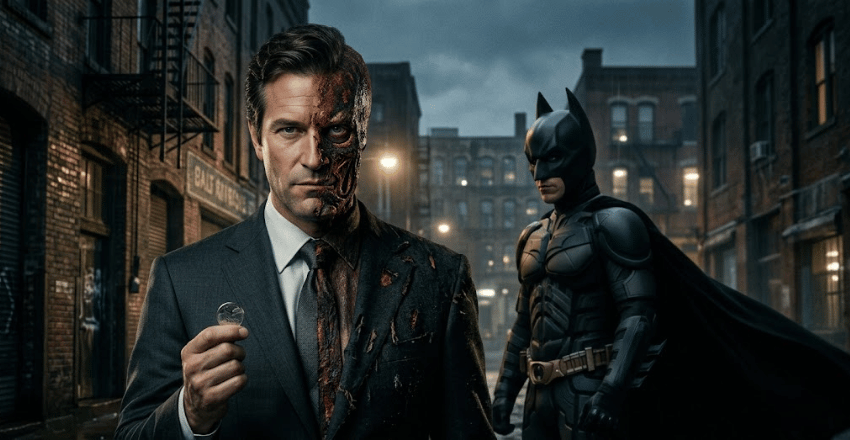
Two-Face has always worked because his appearance immediately expresses his central conflict. Readers see two opposing halves before knowing anything about his history. The Absolute design keeps that clarity while giving artists several new visual tools.
Making Harvey part of Bruce’s childhood circle also changes what his fall means. Batman is not watching another Gotham official become corrupted. He is watching someone from his earliest years move toward becoming an enemy.
That approach mirrors the series’ broader treatment of Batman’s famous supporting characters. Familiar names don’t always start in their traditional roles. Their eventual transformations therefore feel like unfolding tragedies instead of predetermined introductions.
Where Does Absolute Two Face First Appear?
Readers looking for the main transformation should start with Absolute Batman #21. The issue was released in the U.S. on June 17, 2026, during The Straw Man storyline. It is written by Scott Snyder and features art by Nick Dragotta.
The character does not disappear after that issue. Harvey is listed among the characters appearing in Absolute Batman #23 and Absolute Batman #24. Those issues continue developing the changed relationships surrounding Bruce and his former friends.
For new readers, beginning earlier in the series provides stronger emotional context. Harvey’s transformation matters more when you understand his connection to Bruce before everything changes. Issue #21 is still the essential starting point for readers mainly interested in his Two-Face identity.
Is Harvey Dent Already a Full Batman Villain?
The series treats Harvey’s status with more uncertainty than a traditional villain introduction. By Absolute Batman #24, he remains connected to Bruce’s wider circle even as tensions continue to grow. That keeps his future allegiance less predictable than the familiar Two-Face formula.
This ambiguity gives Snyder room to make Harvey’s choices matter. Readers know what Two-Face usually becomes, but this universe does not need to follow every familiar step. The suspense comes from seeing which classic traits survive and which ones change.
His relationship with Joker may become especially important as the story develops. Recent discussion of issue #24 highlights uncertainty around Dent’s loyalties and possible outside influence. The comic therefore leaves room for further changes rather than treating his transformation as finished.
What the Design Says About the Absolute Universe
The character demonstrates how the Absolute line changes familiar ideas without removing their core identity. Harvey still represents opposing choices, fractured identity, and uncertainty. The creative team expresses those ideas through different circumstances and stronger visual symbolism.
This approach also prevents the comic from depending only on shock value. A radically different costume would attract attention only briefly. A design tied directly to character behavior can support stories across many issues.
Readers interested in other pop-culture reinventions and internet interpretations can also explore ReadSnow’s guide to the Vin Diesel family meme. That article similarly explains how a familiar character trait can become a larger cultural identity. The connection gives entertainment readers another useful topic without forcing an unrelated Batman link.
Frequently Asked Questions About Absolute Two Face
Who is Absolute Two Face?
Absolute Two Face is Harvey Dent from DC’s Absolute Universe. He is a childhood friend of Bruce Wayne whose life changes dramatically through the events surrounding Absolute Batman. His eventual transformation reworks the familiar Two-Face concept around a mind that is more physically divided.
What issue does Absolute Two-Face appear in?
The major Two-Face reveal occurs in Absolute Batman #21. The issue reached U.S. comic shops on June 17, 2026. Harvey continues to appear in later issues, including issues #23 and #24.
Why does he have long hair?
The long hair has a storytelling purpose instead of being purely decorative. Snyder explains that Harvey can use it to conceal the side of his face that isn’t controlling him. The look also draws from old judicial imagery, connecting back to Harvey Dent’s identity.
Is Absolute Harvey Dent Bruce Wayne’s friend?
Yes, this continuity establishes Harvey as one of Bruce Wayne’s childhood friends. That history changes the emotional weight of his transformation. Batman may be confronting someone who knew Bruce long before either man reached his familiar comic-book role.
Who created this version of Two-Face?
Scott Snyder writes Absolute Batman, while Nick Dragotta developed the prominent visual design seen around issue #21. Dragotta has publicly discussed the character’s hair and coin-focused appearance. Their approach retains Harvey’s duality while changing how readers see it.
Why This Harvey Dent Matters
This reinvention succeeds because it changes Harvey without discarding what makes him recognizable. His choices still revolve around division, identity, and chance. The difference is that every part of his new history makes those ideas more personal for Bruce Wayne.
The result gives Absolute Batman another relationship that can evolve instead of following a fixed villain formula. Harvey may become a direct enemy, remain conflicted, or move between both positions. Readers now have a reason to watch his choices rather than assuming they already know the outcome.
If you are following the Absolute Universe, Absolute Batman #21 is the key issue to read for this transformation. Issues #23 and #24 provide useful follow-up material as Harvey’s place in Bruce’s circle develops. His story is still moving, which makes this one of the series’ most interesting character changes.