


The Kangal bite force is often quoted at 743 PSI, which sounds like a precise scientific measurement. That number is widely repeated online, but its original controlled test is difficult to trace. Current evidence supports a simpler conclusion: this is a powerful guardian, but 743 PSI is not a verified breed record.
The Kangal bite force is commonly cited as 743 PSI, but no published standardized breed test clearly verifies that figure. Peer-reviewed canine research shows larger skulls can produce greater biting forces. Treat 743 PSI as an unconfirmed estimate, not a measured world record.
| Question | Best-supported answer | Evidence level |
| Common online figure | 743 PSI | Widely repeated, not verified by a standardized breed test |
| Peer-reviewed breed record | None located | Strong evidence that the viral number remains unverified |
| Scientific finding | Bite force varies with skull size and shape | Supported by peer-reviewed canine research |
| Traditional role | Livestock guardian from Turkey | Supported by official breed standards |
| U.S. registry context | UKC recognizes Kangal Dog; AKC recognizes Anatolian Shepherd Dog | Supported by registry sources |
Key takeaways
- The 743 PSI figure is popular, but its original controlled measurement is unclear.
- Peer-reviewed research supports strong effects from skull size and shape.
- PSI comparisons can mislead when methods and contact areas differ.
- A powerful bite alone does not predict everyday behavior.
- U.S. readers should distinguish registry names before comparing breed claims.
Is the Kangal Bite Force Really 743 PSI?
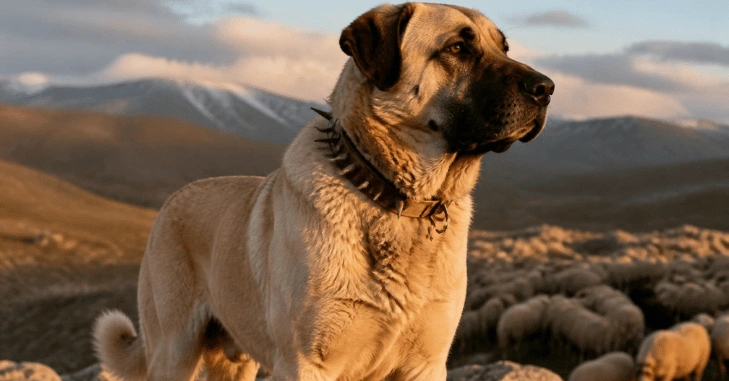
The Kangal bite force claim of 743 PSI appears on breed charts, blogs, and social posts across the web. Yet current sources rarely identify a peer-reviewed study that directly recorded that result. Dogster’s 2026 veterinary review also says the source is difficult to pinpoint.
A peer-reviewed 2009 Journal of Anatomy study offers important context for these claims. Researchers predicted canine biting forces from skull measurements rather than live breed tests. The study explicitly states observed bite-force values were unavailable for its database.
That research found that bite force generally increased with skull size. Skull shape also affected predicted force in medium and large dogs. Those findings support strong jaws in large guardians, but they do not validate a 743 PSI figure.
Why PSI Is Harder to Compare Than It Looks
PSI means pounds per square inch, so it measures pressure, not force alone. A pressure number depends on both force and the contact area. Tooth position, bite angle, sensor design, and effort can all change a reading.
Live-animal testing introduces another problem because dogs do not bite every device with equal effort. Motivation, training, discomfort, age, and individual anatomy can alter the result. Different test methods can therefore produce numbers that are not directly comparable.
Peer-reviewed canine studies often report force in newtons or model predicted forces from skull anatomy. Popular breed charts often convert everything into a single PSI ranking. That creates a neat list, but the scientific foundation is much less tidy.
What Science Does Tell Us About This Guardian’s Jaws
Official breed standards describe the Kangal as a large, powerful livestock guardian. The United Kennel Club notes a large head, deep muzzle, and complete set of large teeth. These structural traits fit a dog developed for demanding protection work.
The FCI standard lists Turkey as the breed’s origin and guarding sheep as its traditional use. It also describes an active dog able to work through severe heat and cold. That history explains why strength and physical durability mattered in the breed’s development.
Still, working purpose does not provide an exact pressure reading. A dog can be physically formidable without having a verified laboratory PSI record. The safest interpretation separates documented anatomy and history from internet numbers.
Does Any Dog Have a Scientifically Proven Strongest Bite?
No published study has tested every dog breed under identical conditions and ranked them by PSI. That makes a definitive strongest-bite title difficult to support scientifically. A breed may top popular charts without holding a standardized laboratory record.
This matters because common comparison tables mix estimates, media demonstrations, and studies using different methods. The same problem affects figures assigned to Cane Corsos, Rottweilers, mastiffs, and other large dogs. Comparing unmatched measurements can make small differences look more meaningful than they are.
For readers, evidence level matters more than a viral ranking. Ask whether a number came from a named study, sample, device, and repeatable method. If those details are missing, treat the number as an estimate or popular claim.
Kangal vs. Anatolian Shepherd in the United States
U.S. naming can make research confusing. The UKC publishes a separate Kangal Dog standard, while the AKC recognizes the Anatolian Shepherd Dog. Internationally, the FCI also recognizes the Turkish Kangal Shepherd Dog under its own standard.
That does not mean every dog called an Anatolian Shepherd is genetically identical to every Turkish guardian. Breed registries have used different classifications and histories over time. Check the registry and pedigree when a breeder or article uses either name.
For bite-force research, the naming problem creates another reason to avoid false precision. A study must identify the dogs it tested before its results can support a breed-specific claim. A recycled chart usually does not provide that information.
Does a Strong Bite Make the Breed Dangerous?
Bite capacity describes physical ability, not a dog’s intentions or everyday behavior. Temperament, socialization, management, training, health, and context all affect real-world behavior. A large guardian can still cause serious injury if an incident occurs.
Prospective owners should focus on secure containment, early socialization, and reliable handling. ReadsNow’s dog-training guide explains when professional help can help with difficult behaviors. Large independent guardians need owners who can manage size, strength, and territorial instincts responsibly.
Home management matters too because strong dogs can defeat weak barriers or unsecured household items. ReadsNow’s dog-proof trash-can guide shows how physical management can reduce preventable access problems. The same principle applies to gates, fences, doors, and visitor routines.
What Should U.S. Owners Take From the Bite-Force Debate?
Don’t choose or reject a dog based on one viral PSI number. For U.S. households, housing rules, insurance terms, local ordinances, and property layout may matter more. Check those details before bringing any giant guardian into your home.
The breed’s historical job also deserves serious weight. Livestock guardians were developed to make independent decisions around territory and animals. That can differ sharply from a highly handler-focused companion or sporting breed.
If you already own a large guardian, prioritize prevention over testing its physical limits. Use secure fencing, structured introductions, and suitable training support. Browse ReadsNow’s Pets section for related dog care and household safety guidance.
What the 743 PSI Claim Gets Right and Wrong
The famous number gets one broad idea right: this is a large working guardian with powerful jaws—official standards and canine biomechanics support that general description. The problem starts when 743 PSI is presented as a verified laboratory record.
A safer wording is: commonly cited at 743 PSI, but not scientifically confirmed. This phrase preserves the familiar search answer without overstating the evidence. It also distinguishes a popular estimate from a controlled measurement.
For SEO pages, accuracy matters more than repeating a dramatic claim. Current search results increasingly question the source behind the number. An evidence-first explanation answers the query without depending on an unsupported record.
The Practical Takeaway
The Kangal bite force topic is more useful when it leads to better questions about evidence. The famous 743 PSI figure is widespread, but a standardized scientific record is missing. What is well documented is that Kangals are large livestock guardians bred for strength, endurance, and protective work.
Readers should treat exact bite-force charts with caution unless the methods are transparent. For ownership decisions, focus on temperament, management needs, training, and living conditions. Those factors will matter far more in daily life than an unverified pressure number.
Continue with ReadsNow’s pet coverage if you want practical guidance for living with dogs. Start with training, secure household management, and routines that reduce avoidable risks. Good ownership decisions come from daily management, not a single viral statistic.
Frequently Asked Questions
What is the Kangal bite force?
It is commonly listed online as 743 PSI, but that number lacks a clearly traceable standardized breed study. Peer-reviewed dog research confirms that skull size and shape influence biting force. It does not establish 743 PSI as a measured record for this breed.
Is 743 PSI scientifically proven?
No peer-reviewed source located for this article documents a standardized live test that produced exactly 743 PSI. Recent veterinary-reviewed coverage also describes the figure as difficult to verify. Treat it as a widely repeated estimate, not a confirmed record.
Which dog has the strongest bite?
No scientific all-breed PSI test can settle that question conclusively. Popular rankings often place this Turkish guardian first, but their methods are inconsistent. A defensible answer is that standardized testing has not proven the strongest breed.
Can a bite from this breed cause serious injury?
Yes, any bite from a large, powerful dog can cause significant injury. Physical strength, tooth shape, bite location, and duration all affect the outcome. Bite prevention and responsible handling matter more than debating a single PSI number.
Is a Kangal the same as an Anatolian Shepherd?
The names overlap in some histories and owner communities, but registries do not classify them identically. UKC and FCI publish standards for the Turkish guardian under the Kangal name. The AKC recognizes the Anatolian Shepherd Dog in the United States.