

Introduction
The gaming world is in a perpetual state of evolution, with every passing year introducing new advancements in hardware and immersive digital experiences. One of the most pivotal players driving this technological renaissance is NVIDIA. With its long-standing tradition of innovation in GPU technology, NVIDIA’s upcoming release of the GeForce RTX 5060 is poised to reshape expectations for mid-range graphics cards. Slated to be part of the powerhouse 50-series lineup.
This graphics card is already generating waves of excitement in the gaming and tech communities. While the company remains tight-lipped about the official specifications, widespread leaks and insider insights give us a tantalizing glimpse into what the 5060 graphics card might offer.
Here is a detailed comparison table of the NVIDIA GeForce RTX 5060 and RTX 5060 Ti graphics cards, based on official specifications and recent coverage:
| Feature | GeForce RTX 5060 | GeForce RTX 5060 Ti |
|---|---|---|
| Architecture | Blackwell (GB206) | Blackwell (GB206) |
| CUDA Cores | 3,840 | 4,608 |
| Tensor Cores (5th Gen) | 120 | 144 |
| Ray Tracing Cores (4th Gen) | 30 | 36 |
| Base Clock | 2.28 GHz | 2.41 GHz |
| Boost Clock | 2.50 GHz | 2.57 GHz |
| VRAM | 8 GB GDDR7 | 8 GB / 16 GB GDDR7 |
| Memory Interface | 128-bit | 128-bit |
| Total Graphics Power (TGP) | 145W | 180W |
| Power Connector | 1× 8-pin or PCIe Gen 5 (300W) | 1× 8-pin or PCIe Gen 5 (300W) |
| DLSS Support | DLSS 4 | DLSS 4 |
| Display Outputs | 3× DisplayPort 2.1b, 1× HDMI 2.1b | 3× DisplayPort 2.1b, 1× HDMI 2.1b |
| Max Digital Resolution | 4K @ 480Hz or 8K @ 165Hz (with DSC) | 4K @ 480Hz or 8K @ 165Hz (with DSC) |
| PCIe Support | PCIe Gen 5 | PCIe Gen 5 |
| Launch Date | May 19, 2025 | April 16, 2025 |
| MSRP | $299 | $379 (8 GB) / $429 (16 GB) |
5060 Graphics Card
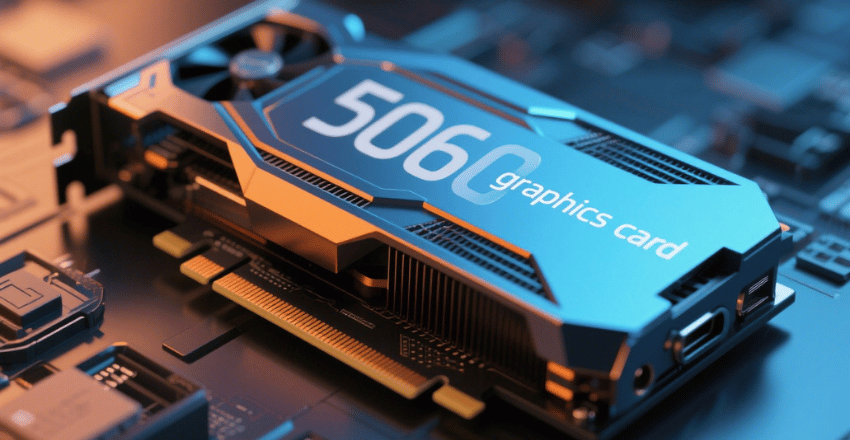
The NVIDIA GeForce RTX 5060 is an upcoming mid-range graphics card expected to be part of the next-generation RTX 50 series, likely built on NVIDIA’s new Blackwell architecture. Although not officially released, early leaks and rumors suggest the RTX 5060 will offer a significant performance boost over its predecessor.
The RTX 4060, thanks to faster cores, improved ray tracing capabilities, and support for DLSS 4.0 or higher. It’s anticipated to feature either 8GB or 12GB of high-speed GDDR6 or GDDR7 memory, making it well-suited for smooth 1080p and even 1440p gaming.
The card is also expected to deliver better energy efficiency and enhanced AI-powered features, appealing to both gamers and creators. With a projected price range of $249–$299, the RTX 5060 could become a popular choice for budget-conscious gamers seeking next-gen performance without breaking the bank.
Anticipated Specs and Performance
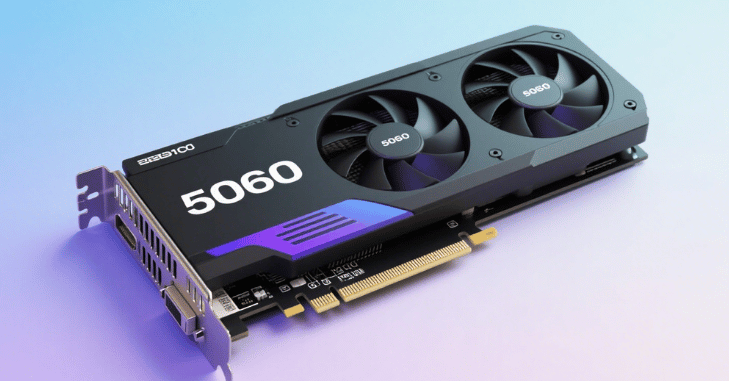
The RTX 5060 is expected to be built upon NVIDIA’s revolutionary Blackwell architecture, a successor to the Ada Lovelace architecture that powered the 40-series cards. The Blackwell platform is engineered with a focus on efficiency, scalability, and raw power, promising a dramatic performance uplift across the board. Users can look forward to improvements not just in raw frame rates, but also in AI-driven rendering, energy consumption, and real-time graphical fidelity.
Speculated core specifications include:
- GPU Architecture: Blackwell (GB206 chip)
- CUDA Cores: Approximately 4,096
- Memory: 8GB GDDR7 (potential 12GB variants may exist depending on SKU)
- Memory Bus Width: 128-bit
- TDP (Thermal Design Power): Estimated between 130W and 150W
- Clock Speeds: Base and boost clocks likely in the 2.5–2.8 GHz range
With these enhancements, the RTX 5060 could outperform the RTX 4060 by a notable margin in both synthetic and real-world benchmarks. Expect smoother gameplay at 1080p and 1440p resolutions, even with demanding titles enabled with ray tracing. It may also narrow the performance gap between mid-range and high-end GPUs, offering more value for the money.
Ray Tracing, AI, and DLSS 4.0 Integration
One of the standout features in NVIDIA’s recent GPU generations has been its focus on real-time ray tracing, and the RTX 5060 will be no exception. Built with enhanced RT cores, the 5060 will allow gamers to experience hyper-realistic environments—think dynamic shadows, ambient occlusion, and reflective surfaces that respond to light just like in the real world.
Paired with this is DLSS 4.0 (Deep Learning Super Sampling), NVIDIA’s latest AI-driven technology that enhances gaming performance without compromising visual quality. DLSS 4.0 is expected to introduce refined frame generation, better motion interpolation, and reduced latency, thanks to more advanced Tensor cores. These improvements ensure that even graphically intensive games remain fluid and visually stunning, even on a mid-range setup.
The RTX 5060 might also offer improved support for Ray Reconstruction, a feature rumored to be optimized in DLSS 4.0 that reconstructs more realistic light paths in real-time. For gamers, this means richer scenes with more accurate color grading, better reflections, and enhanced detail in both dark and brightly lit areas.
Design, Cooling, and Connectivity
Though we haven’t yet seen official renders of the RTX 5060, industry trends and past designs suggest it will follow a compact dual-slot form factor. Expect sleek aesthetics with a streamlined shroud, efficient heat dissipation mechanisms, and perhaps even an updated fan design to reduce noise and thermals under load.
When it comes to connectivity, the RTX 5060 will be built to last and adapt to future demands:
- HDMI 2.1: Supporting high refresh rates, up to 4K at 120Hz, and VRR (Variable Refresh Rate)
- DisplayPort 2.1: Enabling high bandwidth for ultra-wide resolutions and multi-monitor setups
- PCIe 5.0 Support: Providing increased data throughput compared to previous PCIe generations
The inclusion of modern I/O standards ensures that the card remains relevant for years to come, particularly as more monitors and peripherals support these formats.
Ideal Users: Gamers, Creators, and Streamers
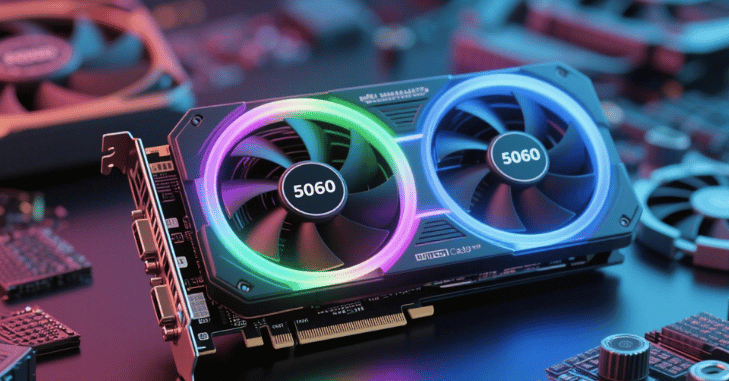
The RTX 5060 isn’t just for casual gamers—its versatility makes it ideal for a broad spectrum of users. Whether you’re assembling a gaming rig on a budget or creating content that demands GPU acceleration, this card could deliver outstanding value. Key demographics include:
- Mainstream Gamers: Those who primarily play at 1080p or 1440p resolutions
- eSports Enthusiasts: Gamers who prioritize frame rates and low input latency
- Content Creators: Editors and designers using GPU-accelerated software like Adobe Premiere Pro, Blender, Unreal Engine, and DaVinci Resolve
- Streamers: Users who rely on smooth, hardware-encoded video output for platforms like Twitch and YouTube
Given NVIDIA’s continued focus on NVENC and AV1 encoding, streamers can expect high-quality output with low CPU overhead, ensuring better multitasking during live broadcasts.
Projected Pricing and Release Timeline
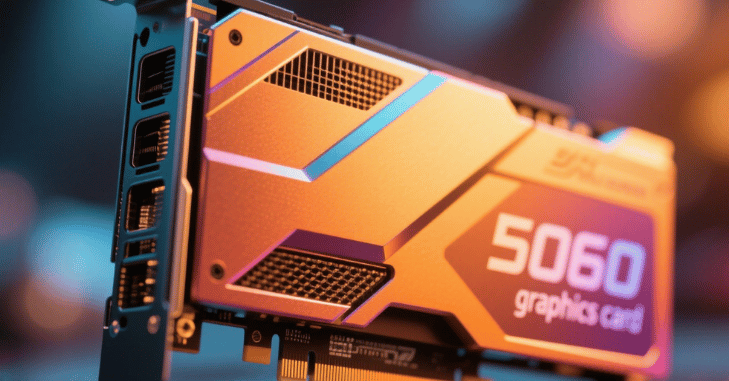
While nothing has been confirmed officially, the RTX 5060 is expected to launch with a price tag in the ballpark of $299 to $349 USD. This pricing strategy mirrors NVIDIA’s efforts to deliver high-end features to the budget-conscious segment of the market.
As for availability, analysts suggest a potential release window between Q4 2025 and Q1 2026. However, this could be subject to change depending on global chip supply, production logistics, and competition from AMD and Intel. Pre-orders and early access programs are likely to follow shortly after the official announcement.
Conclusion: Is the RTX 5060 Worth the Wait?
If the industry whispers and insider leaks are to be believed, the NVIDIA GeForce RTX 5060 may emerge as a standout performer in the mid-tier GPU arena. With a blend of next-gen architecture, AI-powered upscaling, real-time ray tracing, and future-proof connectivity, it promises to be a powerhouse in its category.
Whether you’re looking to breathe new life into an older system, build a cost-effective gaming PC, or create digital content without breaking the bank, the RTX 5060 seems like a compelling choice. It embodies NVIDIA’s commitment to innovation, making cutting-edge graphics more accessible than ever before.
As we await official confirmation, one thing is certain: the RTX 5060 is shaping up to be not just a worthy upgrade—but possibly the new benchmark for what a mid-range graphics card should be. Stay tuned for more details as we inch closer to the next big leap in gaming technology.
Apart from that if you want to know about “Spotify Premium APK Mod for Android: A User’s Perspective” then please visit our “Tech” Category.
FAQs
The RTX 5060 is expected to use the Blackwell architecture, NVIDIA’s successor to Ada Lovelace (used in the 40-series). This architecture may bring significant improvements in performance and efficiency.
Leaked or rumored specs suggest 8 GB or 12 GB of GDDR7 or GDDR6 memory, depending on configuration and final design decisions by NVIDIA.
The RTX 5060 may launch around $249–$299, keeping in line with previous xx60-class cards, but final pricing will depend on performance and market conditions.
While benchmarks aren’t available yet, it is expected to deliver 25–40% better performance, improved ray tracing, and enhanced AI features like DLSS 4.0 (if supported).
The RTX 5060 should handle 1440p gaming quite well, especially with DLSS. However, 4K gaming may require lowered settings for demanding titles.