


If you’re searching for a domestic violence lawyer, the first step is choosing an attorney who handles the legal problem you’re facing. You may need help seeking protection, responding to a court order, handling custody issues, or defending against criminal charges. These matters can involve different courts and different types of attorneys.
Short answer: A qualified attorney can help you identify the appropriate court, prepare for or challenge a protection order, address custody or divorce issues, or defend against criminal charges. The right lawyer depends on whether you’re seeking protection, responding to an accusation, or dealing with overlapping family and criminal cases. State law determines the specific procedures and available remedies.
| Your situation | Legal help to consider | Main issue |
| You want protection from abuse | Family law or protective order attorney | Protection order, safety, custody |
| You received a restraining or protection order | Attorney experienced in contested order hearings | Hearing deadlines and restrictions |
| You were arrested or charged | Criminal defense attorney | Criminal charges and court defense |
| Abuse affects divorce or parenting | Family law attorney | Divorce, custody, parenting orders |
| Immigration status is involved | Immigration attorney with abuse-case experience | Status, petitions, immigration remedies |
| You cannot afford private counsel | Legal aid or nonprofit legal services | Free or reduced-cost assistance |
What a Domestic Violence Lawyer Can Do

An abuse-related case may involve more than one legal proceeding. A lawyer can explain which court handles each issue and which deadlines apply.
For someone seeking protection, legal assistance may include preparing for a protection-order hearing, addressing custody, pursuing support, or dealing with related housing and financial concerns. Legal services for survivors may also extend beyond protection orders to divorce, child support, immigration, housing, and other civil matters.
If you’ve been accused of abuse, you may need a criminal defense attorney, a family law attorney, or both. A criminal case can affect your freedom and other legal rights, while a separate family court proceeding may affect contact, parenting rights, or the use of a shared home.
A protection order is a court order intended to restrict certain contact or conduct. However, a court order does not replace a personal safety plan.
For more general legal reading, you can also browse ReadsNow’s Law section.
Which Type of Attorney Do You Need?
One common mistake is hiring a lawyer whose practice does not match the specific legal matter.
| Type of lawyer | Often a fit for | Questions to ask |
| Family law attorney | Divorce, custody, parenting time, support | How often do you handle abuse-related family cases? |
| Criminal defense attorney | Arrests, charges, bond, criminal hearings | How often do you defend cases involving family or intimate partners? |
| Protective order attorney | Obtaining or contesting court protection | Do you regularly appear at contested hearings? |
| Immigration attorney | Immigration consequences or remedies | Do you handle cases involving abuse-related immigration issues? |
| Legal aid attorney | Civil legal needs for eligible clients | What types of matters can your office accept? |
Some cases require coordination between two lawyers. A criminal defense strategy may affect a family law case, and statements made in one court can matter in another. Tell every attorney about all pending cases and court orders before deciding what to file, submit, or say.
If criminal allegations are part of the case, ReadsNow’s overview of criminal-defense strategy provides general background on how defense counsel may approach serious charges.
What to Bring to Your First Consultation
A productive first meeting starts with organized information. Bring any documents you already have and tell the attorney about upcoming hearings or deadlines.
Consider gathering:
- Court papers, summonses, petitions, and existing orders
- Police reports or incident numbers, if available
- A simple timeline of key events and dates
- Relevant texts, emails, photographs, or voicemails that you lawfully possess
- Names of potential witnesses
- Divorce, custody, or parenting documents
- Information about any related criminal case
- A written list of your questions
- Notes about your budget and fee concerns
Do not alter records to make them appear clearer or more persuasive. Keep original materials whenever possible and ask your attorney how they should be preserved.
Evidence requirements depend on the type of case. ReadsNow’s article on what evidence lawyers use to build a case provides a general overview of why organized records, documents, and witness information can matter.
If a court order restricts contact, follow the order unless a court changes it. Ask your lawyer about the proper legal process for requesting a modification.
What Legal Help May Cost and Where to Find Low-Cost Options
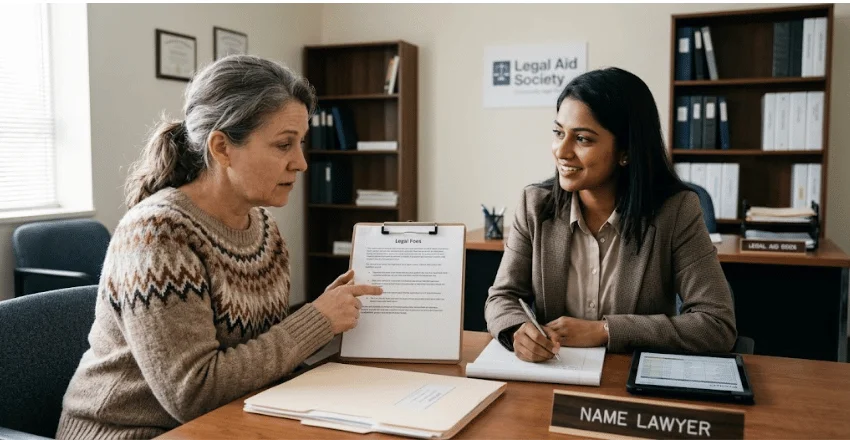
Legal costs can vary widely based on location, case complexity, the number of hearings, and the attorney you hire. Instead of relying on a nationwide average, ask each attorney for a written explanation of their fees.
Ask questions such as:
- Is the fee hourly or fixed for a specific service?
- Is an advance retainer required?
- Are court appearances included?
- Are filing fees, expert costs, investigation expenses, or administrative charges separate?
- What circumstances could increase the total cost?
- Will I receive regular billing statements?
If private representation is unaffordable, free or reduced-cost legal help may be available through nonprofit organizations, local legal aid offices, or lawyer referral programs.
In many jurisdictions, a person can begin the protection-order process without hiring an attorney. Procedures vary by state, and legal representation may be especially helpful when a hearing is contested or when the other party has legal counsel.
7 Questions to Ask Before You Hire a Lawyer
A consultation should help you evaluate experience, communication, cost, and overall fit. Ask direct questions.
- How much of your practice involves cases like mine?
Ask about experience with your specific legal matter, not only the attorney’s general background.
- Do you regularly represent clients in my county or court?
Local procedures can affect scheduling, filings, and courtroom practices.
- Who will handle my case day-to-day?
Find out whether you’ll work directly with the attorney you meet or with another member of the legal team.
- How will you handle overlapping family and criminal issues?
This question is especially important when several cases are pending simultaneously.
- How are fees calculated, and what is included?
Ask for the fee arrangement in writing.
- What needs attention first?
Court dates, filing deadlines, and existing orders may determine your immediate priorities.
- How will we communicate about sensitive information?
Ask which communication methods the office uses and how it handles urgent messages.
Avoid choosing an attorney based on a slogan or advertisement alone. You need someone who is licensed in the correct jurisdiction and has experience with the specific proceeding you face.
If You Need Help Right Now
If you’re in immediate danger in the United States, call 911.
People experiencing abuse may also be able to obtain confidential support, safety planning assistance, shelter referrals, and information about local legal resources through domestic violence organizations in their area.
If you’re concerned that someone may be monitoring your internet activity, consider how and where you access online resources. Using a safer device or a trusted person’s device may reduce the risk of exposing your searches.
If you’re facing criminal allegations, contact a licensed criminal defense attorney promptly. Do not ignore a summons, hearing notice, release condition, or court order.
Your Next Step
Choose legal counsel based on your role in the case, the court involved, and your jurisdiction. A domestic violence lawyer should have relevant experience with the proceeding you face, whether it involves a protection order, family court, or criminal defense.
Start by gathering your court papers, deadlines, and other relevant documents. Then contact a licensed attorney, local legal aid organization, or lawyer referral service. If personal safety is your immediate concern, seek appropriate safety assistance before focusing on the longer-term legal process.
Frequently Asked Questions
Not always. Many jurisdictions allow people to request a protection order without an attorney. Still, legal counsel can be valuable during a contested hearing, when evidence is disputed, or when related custody and criminal issues exist. Check the procedures that apply in your state.
Usually, once a criminal prosecution begins, the prosecutor decides whether to continue the case. The wishes of the complaining witness may be considered, but they do not necessarily end the case. The exact process varies by jurisdiction.
Sometimes, but not every lawyer practices in both areas. Ask about the attorney’s experience with each type of proceeding. In complex cases, separate lawyers may need to coordinate their strategies.
Contact an attorney promptly if you receive court papers, learn about an upcoming hearing, face arrest or criminal charges, or become involved in an urgent custody dispute. Court deadlines can be short, so read every document you receive carefully.
They may be. Eligibility and available services depend on your location, income, available funding, and the type of case. Local legal aid organizations and lawyer referral services may be able to help you find free or reduced-cost representation.